genre american
Grunge
late 1980s–mid-1990s · Seattle, Washington
Seattle's damp, distorted gift to the 1990s: the meeting of punk's DIY ethic and heavy metal's power, landing on mainstream pop radio with Nirvana's 'Nevermind' in 1991.
Grunge formed in Seattle through the late 1980s on Sub Pop Records and the underground touring circuit, driven by bands including Mudhoney, Soundgarden, Alice in Chains and Nirvana who were fusing punk’s aggression and DIY economy with metal’s guitar weight and alternative rock’s melodic instincts. The sound was deliberately unglamorous — flannel shirts, unwashed hair, distorted guitars tuned low — a contrast to the hair metal gloss that dominated rock radio.
The scene broke through pop culture’s surface when Nirvana’s Nevermind was released in September 1991 and began outselling everything. “Smells Like Teen Spirit” was the detonation point: a song that had been passed around the underground already, given an MTV video, and then went to Number One, displacing Michael Jackson. Within months, Pearl Jam, Soundgarden and Alice in Chains had major deals; hair metal’s commercial dominance collapsed almost overnight.
The backlash was as swift as the adoption. Kurt Cobain — who had spent his career in the underground — found mainstream celebrity intolerable and died by suicide in April 1994. His death effectively ended grunge’s brief mainstream moment; Pearl Jam survived by refusing to tour for years. But the infrastructure it created — the expectation that rock could come from anywhere, be recorded cheaply and distributed independently — persisted as the foundation of alternative rock’s 1990s.
Connections
Roots, siblings & influences
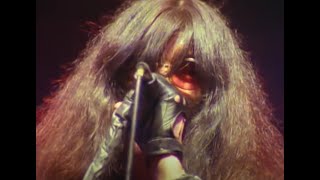
Grunge inherited punk's DIY ethic, its anti-corporate stance and its rhythmic drive — the Seattle underground was built on indie labels and basement shows.

The guitar sound of grunge is indebted to metal's tunings, distortion and riff structures — Neil Young's feedback-drenched guitar was also a direct influence.
Key artists

Sources
- Awopbopaloobop Alopbamboom: Pop from the Beginning — Nik Cohn (1969). Weidenfeld & Nicolson · Book
Discussion
Comments
Read the conversation or sign in with Google to add your own note.