artist american
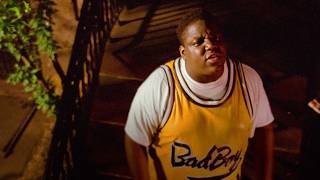
The Notorious B.I.G.
1972–1997 · Bedford–Stuyvesant, Brooklyn, New York
Biggie Smalls: the greatest pure rapper of the East Coast golden age — fluid, funny, cinematic and technically perfect — murdered at 24 in the middle of a coast war he tried to end.
Christopher Wallace — Biggie Smalls, the Notorious B.I.G. — grew up in Bed-Stuy, Brooklyn, sold crack on the street as a teenager, and rapped as a sideline until a Source magazine demo tape feature led to a deal with Bad Boy Records and Sean “Puffy” Combs. His debut Ready to Die (1994) established him immediately as the most gifted pure MC in rap: technically flawless, funny, cinematic in his scene-setting, and capable of switching from braggadocio to genuine pathos (“Suicidal Thoughts”) within a single song.
“Juicy” (1994) is the autobiography: coming up from poverty in Brooklyn to success in the music industry, dedicated to “all the people who lived above their means while I was sleeping on cousins’ couches.” Its hook samples Mtume’s R&B. The album’s follow-up, Life After Death (1997), was finished before his death.
He was shot in Los Angeles on March 9, 1997, six months after Tupac Shakur’s murder in Las Vegas, in what appeared to be a retaliation within the East Coast–West Coast conflict that Puffy Combs and Suge Knight had inflamed. The murder remains officially unsolved. Life After Death was released two weeks after his death and went to Number One.
Part of
Sources
- Can't Stop Won't Stop: A History of the Hip-Hop Generation — Jeff Chang (2005). St. Martin's Press · Book
Discussion
Comments
Read the conversation or sign in with Google to add your own note.