genre american
West Coast Hip-Hop
late 1980s→ · Los Angeles / Compton / Oakland
From N.W.A's Compton documents to Dr. Dre's G-funk to Kendrick Lamar's Pulitzer: the West Coast built its own hip-hop language around the geography and sonic palette of Los Angeles.
West Coast hip-hop developed from the late 1980s with a character shaped by Los Angeles: the car culture (music made for listening in vehicles), the gang geography of Compton and South Central, and eventually Dr. Dre’s G-funk production style that sampled Parliament-Funkadelic and became the genre’s commercial signature.
N.W.A’s Straight Outta Compton (1988) was the declaration of independence from New York’s dominance. Dr. Dre’s The Chronic (1992) and Snoop Dogg’s Doggystyle (1993) established the G-funk aesthetic — slow tempos, synthesizer melodies, laid-back delivery — that made Death Row Records the commercial center of hip-hop for three years. 2Pac’s All Eyez on Me (1996) maintained that position until his murder.
After the East–West violence of 1996–97, West Coast hip-hop lost its commercial dominance temporarily but continued to develop: the Bay Area’s hyphy movement, Compton’s continued productivity, and ultimately the emergence of Kendrick Lamar from the same Compton streets as N.W.A. Lamar’s good kid, m.A.A.d city (2012) and To Pimp a Butterfly (2015) — the latter winning the Pulitzer Prize for Music in 2018 — established West Coast hip-hop’s claim to be as artistically ambitious as any tradition in American music.
Connections
Roots, siblings & influences

West Coast hip-hop developed independently from New York's founding scene, drawing on the same roots but developing regional production aesthetics shaped by Los Angeles.

Dr. Dre's G-funk sampled Parliament-Funkadelic extensively, making West Coast hip-hop's commercial peak a direct sonic descendant of 1970s funk.
Can't Stop Won't Stop: A History of the Hip-Hop Generation · The One: The Life and Music of James Brown
What grew from it
Gangsta rap's dominant commercial form was West Coast, rooted in the Los Angeles basin's gang geography and Dr. Dre's G-funk production style.
Key artists
-

N.W.A
artistNiggaz Wit Attitudes: the Compton collective who invented gangsta rap, reported life in South Central with documentary brutality and terrified the FBI.
-
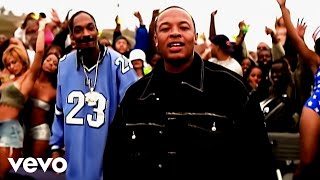
Dr. Dre
artistHip-hop's greatest producer: the Compton beatmaker who invented G-funk with Parliament-Funkadelic samples, built Death Row, then Aftermath, and launched Eminem and Kendrick Lamar.
-

Tupac Shakur
artistThe most complete artist of the gangsta rap era: his charisma, vulnerability and contradictions made him a cultural figure of Shakespearean complexity before his murder at 25.
Sources
- Can't Stop Won't Stop: A History of the Hip-Hop Generation — Jeff Chang (2005). St. Martin's Press · Book
- The One: The Life and Music of James Brown — RJ Smith (2012). Gotham Books · Book
Discussion
Comments
Read the conversation or sign in with Google to add your own note.