artist american
Donna Summer
1948–2012 · Boston, Massachusetts → Munich, Germany
The Queen of Disco: her collaboration with Giorgio Moroder on 'I Feel Love' invented the all-electronic, synthesizer-driven production that became the DNA of dance music.
LaDonna Adrian Gaines grew up singing in church in Boston and left for Europe in the late 1960s, eventually settling in Munich where she met producer Giorgio Moroder. Their partnership yielded the album I Remember Yesterday (1977) and the track that changed everything: “I Feel Love” — 17 minutes on its extended cut, built almost entirely from synthesizers, with a pulsing Moog sequencer pattern that felt like music from another decade. Brian Eno heard it and told David Bowie it was “the sound of the future.”
Summer had already had major success with the 17-minute “Love to Love You Baby” (1975) and would go on to “Hot Stuff,” “Last Dance,” “Bad Girls,” and “She Works Hard for the Money.” But “I Feel Love” is the inflection point: it pointed from disco’s orchestral roots directly toward the synthesizer-driven house and techno music of the 1980s and beyond, connecting the dance music lineage that runs from Philly soul through disco to electronic club culture.
She became a born-again Christian in 1979, a transition that complicated her relationship with the gay audience that had most fervently embraced her. She died of lung cancer in 2012, aged 63. For this graph she is the bridge between disco and electronic dance music.
Part of
-
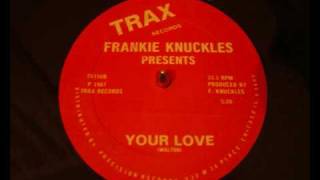
Chicago House
genreBorn at The Warehouse: the genre DJ Frankie Knuckles and Ron Hardy built from disco's ashes in Black and Latino gay Chicago clubs — four-on-the-floor drums, synthesizer basslines and the DJ as conductor.
-

Disco
genreThe club as sacred space: four-on-the-floor kick drum, string orchestration and the DJ as priest — disco created the infrastructure of dance music culture and its aftermath never ended.
-
House
genreThe genre that never stopped: from Chicago's Warehouse to global pop production, house music's four-on-the-floor pulse and gospel-tinged piano chords became the most enduring sound in electronic dance music.
Sources
- Sweet Soul Music: Rhythm and Blues and the Southern Dream of Freedom — Peter Guralnick (1986). Harper & Row · Book
Discussion
Comments
Read the conversation or sign in with Google to add your own note.