genre american
House
mid-1980s→ · Chicago / New York / London
The genre that never stopped: from Chicago's Warehouse to global pop production, house music's four-on-the-floor pulse and gospel-tinged piano chords became the most enduring sound in electronic dance music.
House is both Chicago house’s local origin story and its global continuation: the four-on-the-floor kick drum, the synthesizer bassline, the soulful vocal sample and the DJ as conductor have propagated through every decade since the mid-1980s, generating subgenres (deep house, acid house, progressive house, UK garage, tropical house) while maintaining a recognizable core.
Larry Heard (Mr. Fingers) defined deep house with tracks like “Can You Feel It” (1986) and “Washing Machine” (1986) — emotional, minimal, rooted in the same gospel-soul warmth that had characterized Chicago’s Black community spaces. Marshall Jefferson’s “Move Your Body” (1986) was the first house track built around a piano — a conscious homage to gospel — and the template for the piano-driven house that would dominate UK pop decades later.
House’s export to the UK in 1987–88 created the acid house moment (the Roland TB-303 bassline synthesizer, repurposed by DJ Pierre and Sleezy D, created a squelching alien sound that defined the Summer of Love), which in turn generated the rave scene, which generated UK garage, grime, jungle and drum and bass. In the 2010s, “deep house” aesthetics became a global pop production norm. The genre that Frankie Knuckles built at The Warehouse has never stopped mutating.
Connections
Roots, siblings & influences
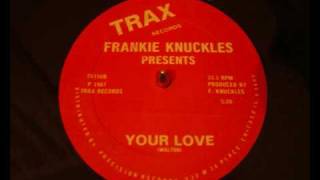
House as a global genre grew from Chicago house's founding aesthetics, developed internationally as producers in New York, the UK and Europe built on the original template.
Sweet Soul Music: Rhythm and Blues and the Southern Dream of Freedom

House maintained disco's four-on-the-floor rhythm and the club-as-community ethos; early house producers explicitly saw themselves as carrying disco's spirit forward.
Sweet Soul Music: Rhythm and Blues and the Southern Dream of Freedom

House music's emotional warmth — its uplift, its piano chords, its soulful vocal samples — is directly descended from Black gospel, filtered through soul and disco.
Sweet Soul Music: Rhythm and Blues and the Southern Dream of Freedom
Key artists
Sources
- Sweet Soul Music: Rhythm and Blues and the Southern Dream of Freedom — Peter Guralnick (1986). Harper & Row · Book
Discussion
Comments
Read the conversation or sign in with Google to add your own note.