genre american
Free Jazz
1959→ · New York City / Chicago / Europe
Ornette Coleman's liberation: no chord changes, no fixed meter, no agreed key — improvisation returning to pure melody and pure feeling, the most radical gesture in jazz history.
Ornette Coleman’s 1959 quartet at the Five Spot Café in New York — “Lonely Woman,” The Shape of Jazz to Come, Change of the Century, the double-quartet recording Free Jazz (1960) — defined the new form and named it. Free jazz removed the chord sequence from improvisation. The musicians no longer played “the changes” — the pre-agreed harmonic progression that had organized jazz improvisation since bebop. Instead they improvised melodically, responding to each other in real time without a harmonic grid.
Coleman called his theoretical framework harmolodics — the idea that melody, harmony and rhythm were equivalent and interchangeable, that each musician could express any of the three simultaneously. In practice, this produced music that sounded simultaneously chaotic and deeply conversational: the musicians were listening to each other more completely, not less, because there was no harmonic safety net.
The movement ramified in several directions. John Coltrane’s late work (Ascension, 1965; Meditations, 1965; Interstellar Space, 1967) pushed free improvisation toward religious ecstasy and sonic density. The Association for the Advancement of Creative Musicians (AACM) in Chicago — Muhal Richard Abrams, Anthony Braxton, the Art Ensemble of Chicago — brought a compositional seriousness to free jazz and connected it to a broader Black cultural project. Albert Ayler took it toward pure sound and folk melody simultaneously. In Europe, Derek Bailey, Peter Brötzmann and the British and German free improvisation scenes developed parallel and independent approaches. Free jazz remains the most contested and the most consequential development in the music’s history.
Connections
Roots, siblings & influences

Free jazz took bebop's emphasis on individual expression and improvisational daring to its logical conclusion: if bebop freed melody from swing's regular patterns, free jazz freed it from harmony itself.

Modal jazz's reduction of harmonic structure paved the way for free jazz's elimination of it — each step away from the chord sequence made the next step imaginable.
What grew from it
Free jazz's liberation of rhythm and harmony created pressure on post-bop musicians to push their own boundaries, even while maintaining more conventional structures.
Key artists
-
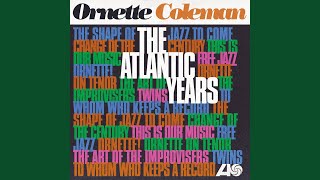
Ornette Coleman
artistThe most controversial man in jazz: Ornette Coleman's free jazz removed harmony and the chord sequence from improvisation and replaced them with pure melodic intuition.
-
John Coltrane
artistThe jazz search engine: Coltrane spent his brief career systematically exhausting every musical possibility from bebop to free jazz, then died at 40 having changed everything.
Sources
- The History of Jazz — Ted Gioia (2011). Oxford University Press (2nd ed.; first published 1997) · Book
Discussion
Comments
Read the conversation or sign in with Google to add your own note.