genre american
Garage Rock
mid-1960s · across the United States
Teenagers in garages playing the British Invasion back louder and sloppier: raw, reverb-drenched and urgent — the first wave of underground rock that pointed toward punk.
Garage rock is what happened when millions of American teenagers heard the British Invasion and went home to play it themselves. The name is literal: bands recording in garages, basements and cheap studios across the United States, with varying levels of skill and production, producing a few hundred thousand singles between 1963 and 1968. Most of them sold locally or not at all.
The music was distinguished by its rawness — the distorted guitar tone of the Kinks’ “You Really Got Me” (1964), widely credited as the first riff to use deliberate amplifier distortion, was as important as anything in garage rock’s DNA. American bands like the Kingsmen (“Louie Louie”), the Sonics (“Psycho,” “The Witch”), and the Seeds took the Kinks’ aggression and the Stones’ attitude and added their own local texture.
What matters historically is what garage rock did after the 1960s: the Velvet Underground, the Stooges (Iggy Pop) and the New York Dolls in the early 1970s took garage rock’s spirit and amplified its darkness. The Ramones distilled it to its essence. When Jon Savage compiled Nuggets in 1972 — the defining compilation of 1960s garage tracks — he named the music that became the foundation of punk’s self-understanding.
Connections
Roots, siblings & influences

Garage rock was American teenagers hearing the British Invasion and playing it back with their own electric guitars, drums and attitudes.
The direct catalyst: American kids buying cheap guitars after the Beatles appeared on Ed Sullivan in 1964 and recording in basements and garages.
What grew from it

The Velvet Underground, the Stooges and the New York Dolls — garage rock's darkest branches — were the canonical ancestors of alternative rock's underground.
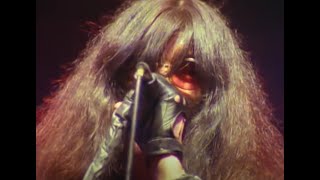
Punk is the logical endpoint of garage rock's rawness and energy — the same attack, now explicit in ideology and stripped further of commercial ambition.
Key artists
Sources
- Awopbopaloobop Alopbamboom: Pop from the Beginning — Nik Cohn (1969). Weidenfeld & Nicolson · Book
- Rock and roll ↗ . Encyclopædia Britannica · Encyclopedia
Discussion
Comments
Read the conversation or sign in with Google to add your own note.