genre american
Rock 'n' Roll
mid-1950s–early 1960s · Memphis / Chicago / New Orleans
Blues rhythm and form aimed at teenagers: Chuck Berry's guitar stories and Elvis Presley's Sun sessions turned Black rhythm and blues into a national youth music.
Rock ‘n’ roll was less a new music than a new audience. Musically, its first records are rhythm and blues: twelve-bar forms, backbeat drumming, boogie bass lines. What changed in 1954–56 was who was buying — white teenagers with postwar pocket money, reached through new channels: independent labels, disc jockeys like Alan Freed (who popularized the term “rock and roll,” itself long-standing Black slang), and 45-rpm singles (Britannica, “Rock and roll”).
The style’s two founding figures map its two parents. Chuck Berry, at Chess in Chicago, wrote precision-tooled story-songs about cars, school and girls over a country-tinged boogie guitar — “Maybellene” (1955) began as a reworking of the fiddle tune “Ida Red.” Elvis Presley, at Sun in Memphis, was a white Southerner steeped in Black blues and gospel as well as hillbilly music; his first single (1954) paired a blues (Arthur Crudup’s “That’s All Right”) with a bluegrass waltz (Bill Monroe’s “Blue Moon of Kentucky”) played with blues feel — the fusion in a single seven-inch artifact (Guralnick 1994).
The genealogy was never a secret — Presley himself told reporters that “the colored folks been singing it and playing it just like I’m doin’ now, man, for more years than I know” — but the rewards were unequally distributed: white performers and white-owned labels captured most of the money and credit for a music whose grammar was Black. That tension, documented throughout this tree’s sources, is part of rock ‘n’ roll’s story, not a footnote to it. From here the lineage runs onward through rockabilly and the British blues revival — both now on this map — toward the whole rock family.
Connections
Roots, siblings & influences

Chuck Berry was a Chess Records artist; the first rock 'n' roll records were structurally blues records played faster for a younger audience.
Rock and roll · Deep Blues: A Musical and Cultural History of the Mississippi Delta
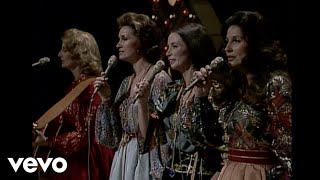
The hillbilly side of the equation: Berry's 'Maybellene' reworked a country fiddle tune, and Presley came up through country radio and hillbilly bookings.
Last Train to Memphis: The Rise of Elvis Presley · Country Music, U.S.A.

The vocal fervor of early rock — Presley included — was learned in church and from gospel radio.
Last Train to Memphis: The Rise of Elvis Presley · The Gospel Sound: Good News and Bad Times
What grew from it
The repertoire and stage vocabulary were learned from Chuck Berry, Little Richard, Buddy Holly and early rock 'n' roll.
Rock and roll · Tune In: The Beatles: All These Years, Volume 1
The beat, teenage address and guitar-band format remained rooted in rock 'n' roll even when the songs returned to blues structures.

Folk rock applied rock's amplified rhythm section and energy to the song structures and lyrical concerns of the folk revival.

Garage rock was American teenagers hearing the British Invasion and playing it back with their own electric guitars, drums and attitudes.
Rock's amplification, studio techniques and audience — Davis was listening hard to Jimi Hendrix.
Liverpool groups built their sets from Chuck Berry, Little Richard, Buddy Holly, Motown and girl-group records, then tightened the sound for British clubs.
Tune In: The Beatles: All These Years, Volume 1 · The Beatles Anthology · Rock and roll

Pop absorbed rock 'n' roll's energy while smoothing its edges for broader commercial appeal — the process Motown systematized.
Psychedelic rock kept the rock band and backbeat but expanded song form, harmony, timbre and studio practice.
The blues/R&B half of the equation, filtered through Sun Records' echo.
Last Train to Memphis: The Rise of Elvis Presley · Rock and roll

Surf rock took rock 'n' roll's guitar-drum foundation and added reverb and tremolo effects to evoke the feel of waves and outdoor California life.
Key artists
-

Chuck Berry
artistRock 'n' roll's chief architect: a Chess Records bluesman who aimed blues guitar and country storytelling at teenagers and wrote the genre's foundational songbook.
-
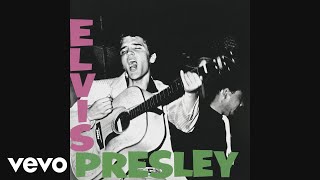
Elvis Presley
artistThe Sun Records sessions of 1954–55 fused blues, gospel and hillbilly in one voice — and showed the industry that the fusion, sung by a white Southerner, could sell to everyone.
Sources
- Rock and roll ↗ . Encyclopædia Britannica · Encyclopedia
- Last Train to Memphis: The Rise of Elvis Presley — Peter Guralnick (1994). Little, Brown and Company · Book
- Deep Blues: A Musical and Cultural History of the Mississippi Delta — Robert Palmer (1981). Viking Press · Book
- Country Music, U.S.A. — Bill C. Malone and Jocelyn R. Neal (2010). University of Texas Press (3rd rev. ed.; first published 1968) · Book
- The Gospel Sound: Good News and Bad Times — Anthony Heilbut (1971). Simon & Schuster · Book
Discussion
Comments
Read the conversation or sign in with Google to add your own note.